

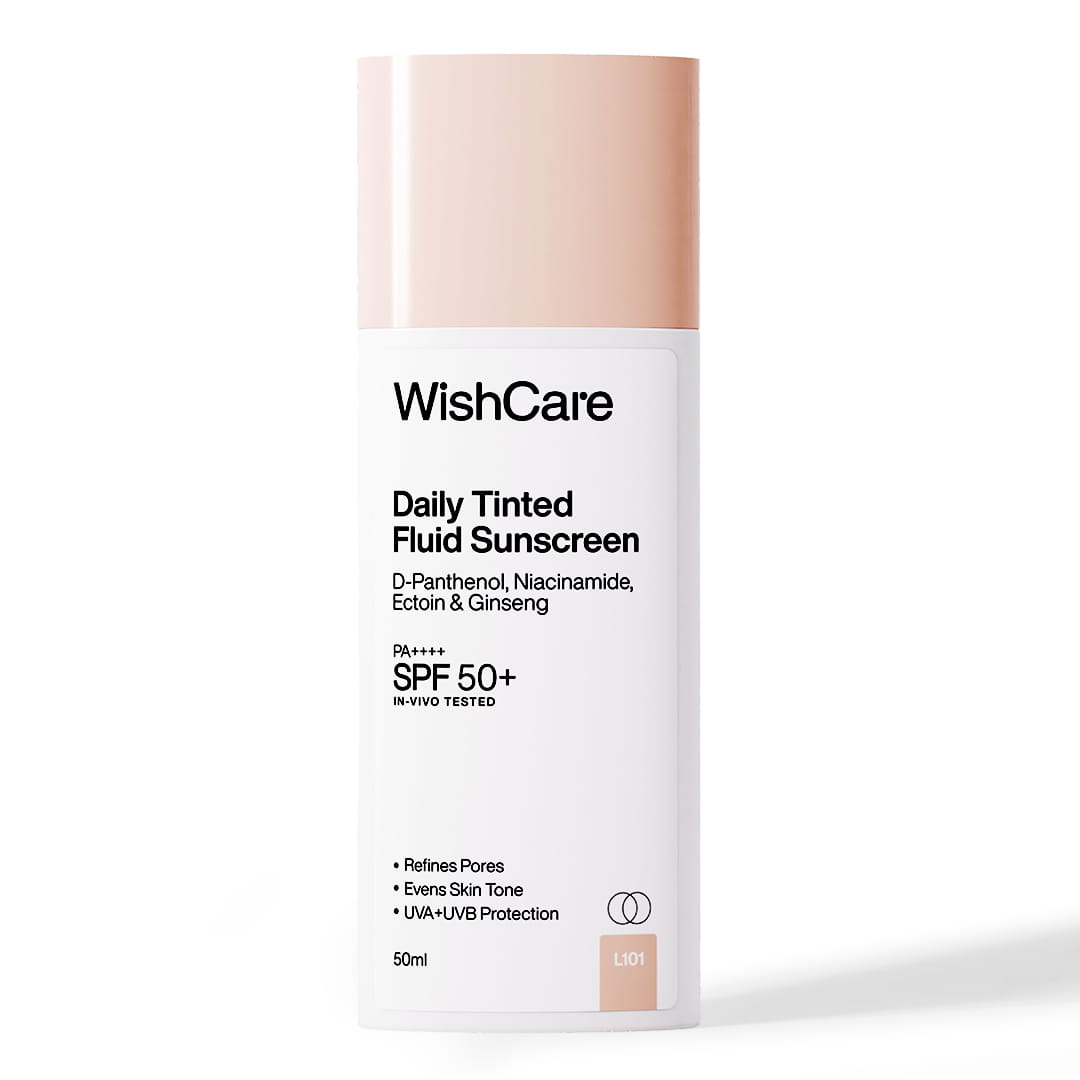
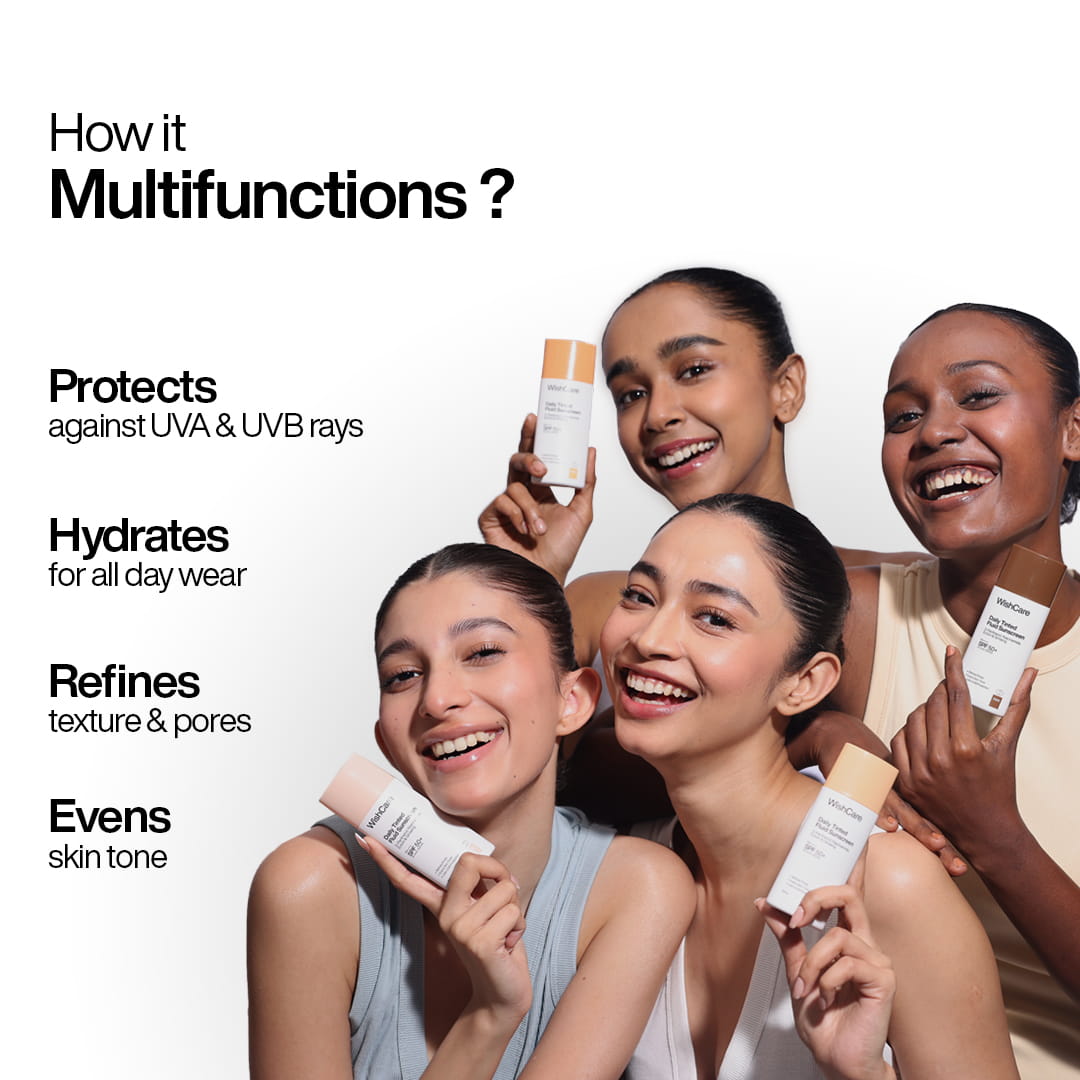
Sunscreen for oily skin is not about finding one that "is not too heavy." It is about finding one that actively works with your skin's oil production, not against it.
Most sunscreens on Indian shelves feel fine for the first 30 minutes. Then the oil starts showing through, the sunscreen pills under makeup, or you break out two days later. The problem is not sunscreen in general. It is the wrong formula for your skin type.
This guide tells you exactly what ingredients and formula properties to look for when choosing a sunscreen for oily, acne-prone, or combination skin in India. It also explains why niacinamide sunscreen has become the go-to recommendation for this skin type and what a well-formulated option actually looks like.
Why Most Sunscreens Make Oily Skin Worse?
Standard sunscreens are formulated for average or broad skin types. They prioritize SPF efficacy and stability, not oil control. This means they typically contain:
- Emollients and occlusives that leave a greasy residue (mineral oil, petrolatum, heavy esters)
- Thick emulsifying waxes that sit on top of oily skin and pill under makeup
- No active oil-control ingredients just UV filters
Mineral-only sunscreens (zinc oxide and titanium dioxide without chemical filters) are often the worst offenders for oily skin. Their particle size requires heavier emollients to stay on skin, and the white cast they leave means most people apply less product which means less SPF protection.
For Indian skin specifically, the combination of high-UV intensity, high humidity, and naturally higher sebum production makes the right sunscreen formula even more important.
What to Look for in a Sunscreen for Oily Skin
Use this as your buying checklist:
| Property | What It Means | Why It Matters for Oily Skin |
|---|---|---|
| SPF 50 minimum | Strong UVB protection | India's UV index peaks at 10–12 during summer; SPF 30 is inadequate |
| PA++++ | Highest UVA protection rating | UVA drives tanning, pigmentation, and skin ageing |
| Matte finish | No shine or gloss after application | Prevents the "greasy sunscreen" look by mid-morning |
| Fluid or gel texture | Lightweight, water-based formulas | Absorbs without leaving a film; does not clog pores |
| Non-comedogenic | Does not block pores | Essential for acne-prone skin |
| 5% niacinamide | Vitamin B3 oil-control active | Reduces sebum production at the gland level |
| Zinc PCA | Zinc salt that controls oil | Works alongside niacinamide to regulate sebum |
| No OMC or oxybenzone | Cleaner UV filter system | Older filters linked to sensitization and hormonal concerns |
| In-Vivo SPF tested | Lab-validated SPF claim | ISO 24444:2019 testing ensures the stated SPF is accurate |
| Photostable | Does not degrade in sunlight | ISO 24443 photostability testing confirms the formula holds up |
Ingredients That Actively Control Oil in Sunscreens
Not all sunscreens are equal when it comes to oil control. Here are the ingredients that make a real difference:
Niacinamide (Vitamin B3) 4–5%
Niacinamide at this concentration reduces sebum excretion rate (SER), the speed at which your skin produces oil. Clinical studies show visible oil reduction and mattifying effects within 2–4 weeks of consistent use. It also fades post-acne marks, which is a major secondary benefit for oily and acne-prone skin types.
Zinc PCA
Zinc PCA is a zinc salt of pyrrolidone carboxylic acid. It works at the level of the sebaceous gland to slow oil secretion. Unlike blotting papers or dry-finish powders that absorb existing oil, Zinc PCA targets the production source. It also has mild antimicrobial properties, which help keep acne-causing bacteria in check.
Silica
Spherical silica particles absorb excess oil on the skin surface and create a mattifying effect. They also improve the spreadability of the formula, making fluid sunscreens easier to apply without streaking. Silica is a physical oil absorber; it works instantly rather than over weeks like niacinamide.
Tapioca Starch
Like silica, tapioca starch absorbs surface oil and improves texture. It gives sunscreens a smooth, skin-like finish rather than a plasticky or waxy feel.
Centella Asiatica (CICA)
Centella Asiatica calms sebaceous gland inflammation, one of the root causes of acne. Inflamed glands produce more oil. CICA reduces this inflammatory response, contributing to long-term oil regulation.
Oats Extract
Colloidal oat extract soothes skin and reduces the inflammation that triggers sebum overproduction. For acne-prone skin, this makes the sunscreen-wearing experience significantly more comfortable.
How to Layer Sunscreen on Oily Skin Without Clogging Pores
Apply sunscreen as the final step in your morning routine, after moisturizer and before makeup. Use at least two finger-lengths of product for full-face coverage. Let it absorb for 2–3 minutes before layering anything on top. Reapply every two hours when outdoors, especially if you are sweating or in direct sunlight.
For very oily skin, a lightweight gel moisturizer underneath a matte fluid sunscreen is the most effective combination. Skipping moisturizer entirely often backfires: dehydrated skin compensates by producing more oil.
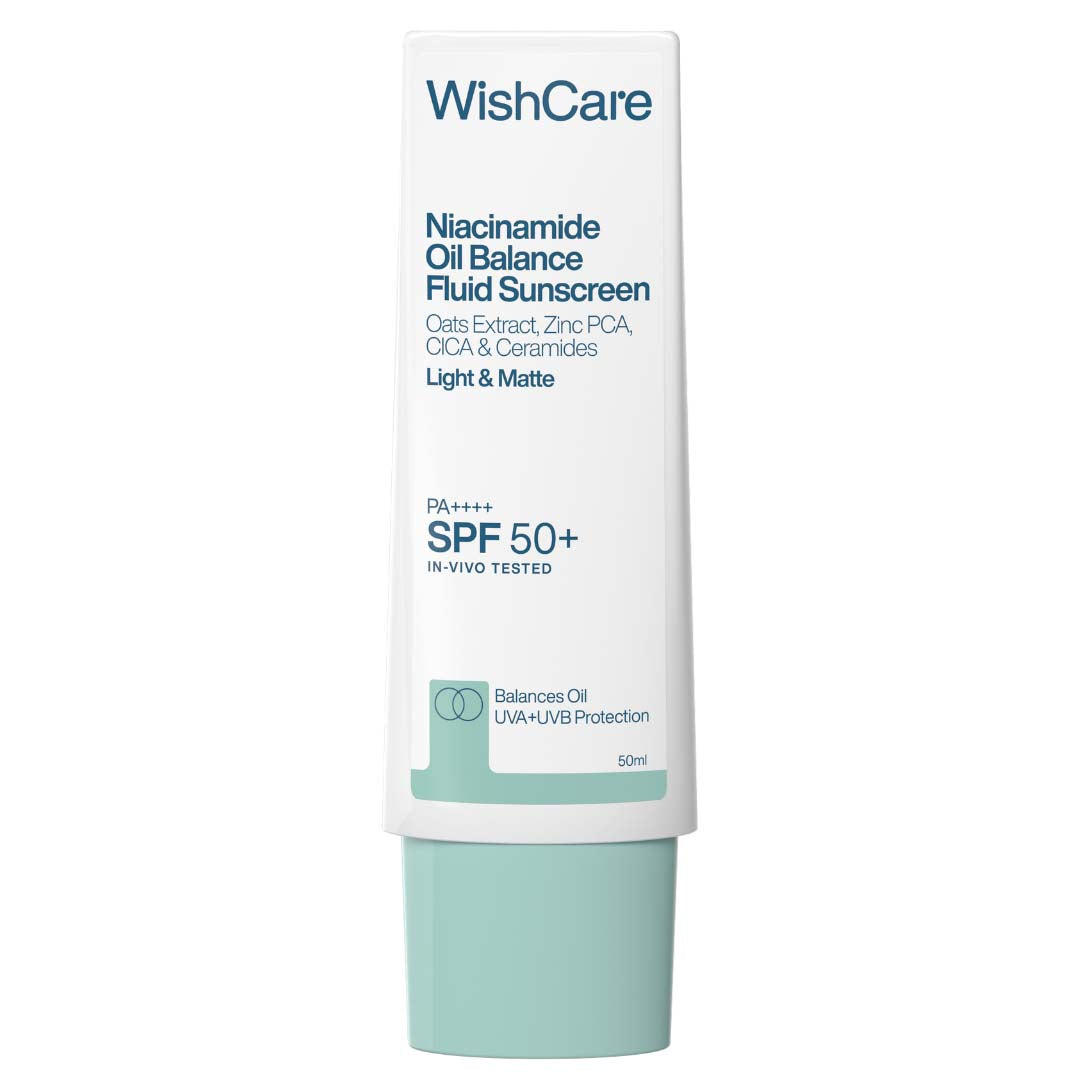
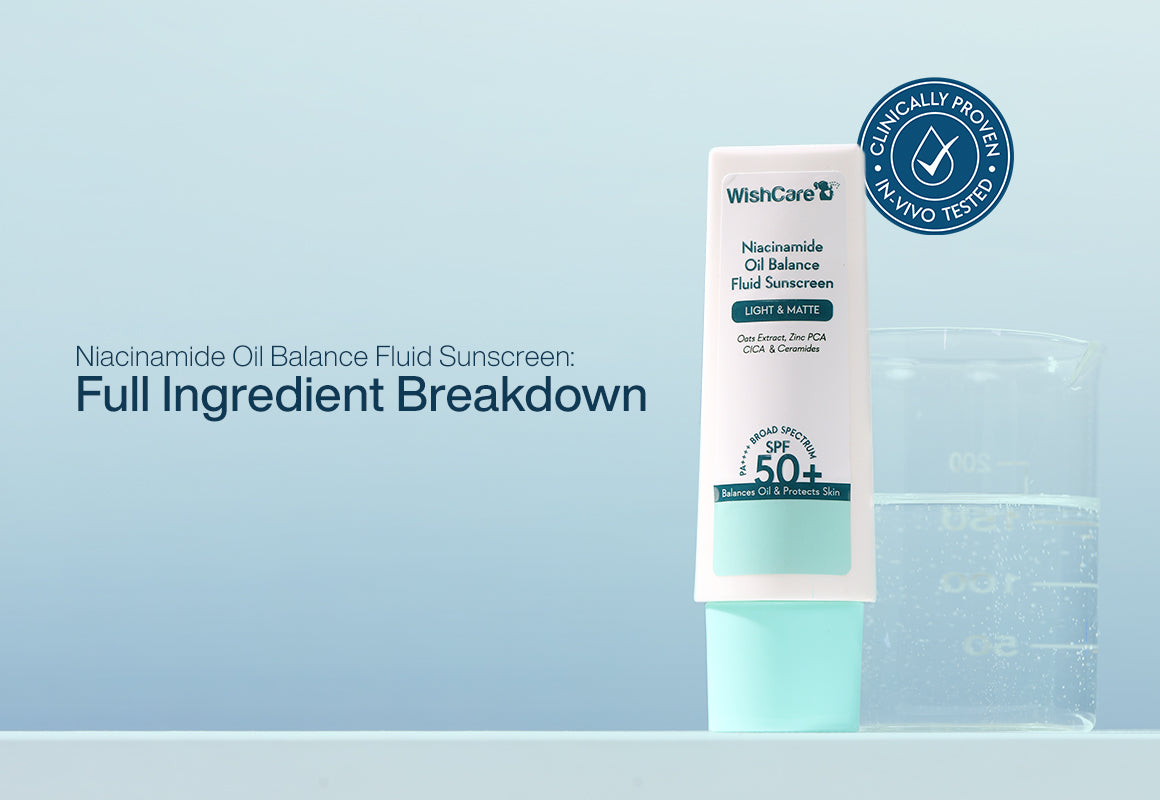
WishCare Niacinamide Oil Balance Fluid Sunscreen: Full Ingredient Breakdown
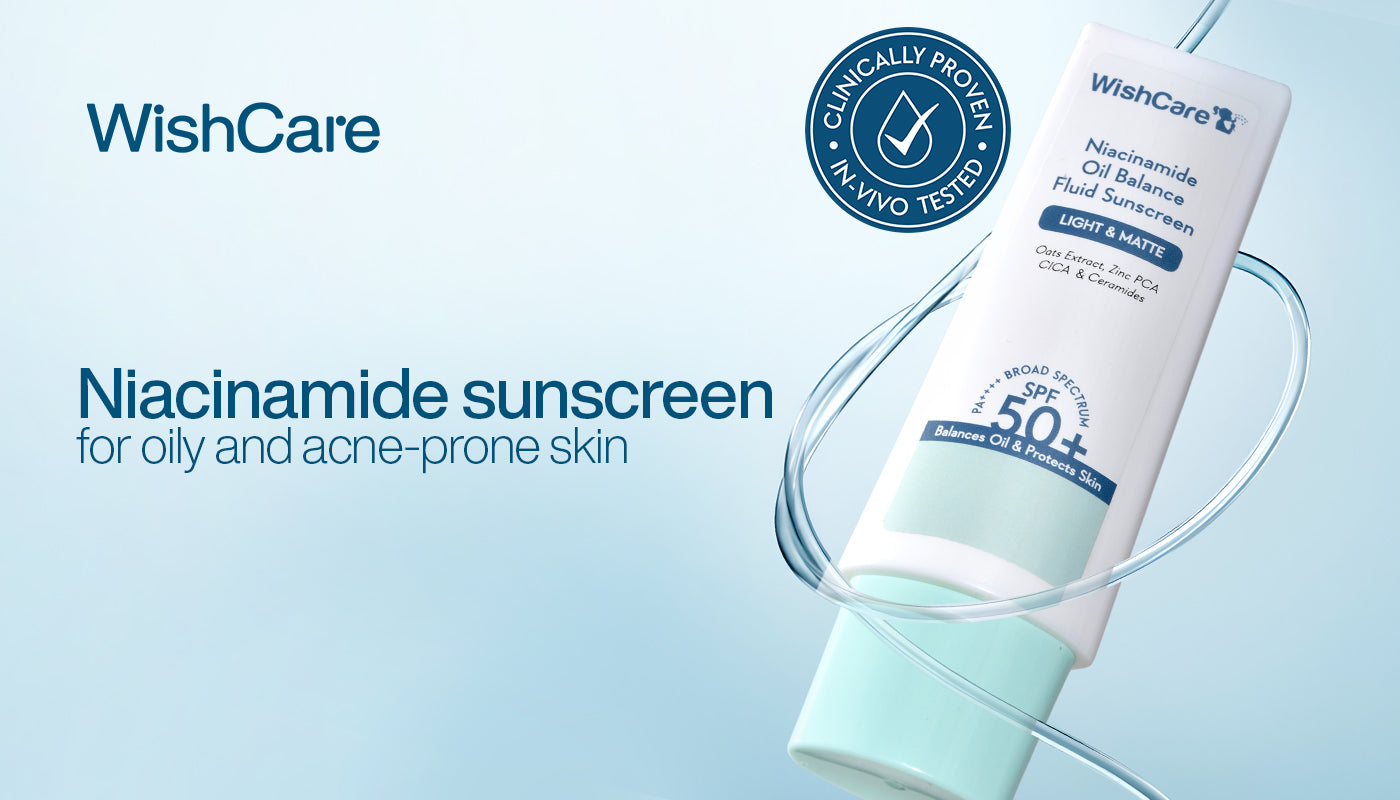
The WishCare Niacinamide Oil Balance Fluid Sunscreen SPF 50 PA++++ is formulated specifically for oily, combination, and acne-prone skin. Here is how its ingredient stack compares to what the best sunscreen for oily skin in India should contain:
| What to Look For | WishCare Formula | Notes |
|---|---|---|
| SPF 50 minimum | In-Vivo SPF: 50.025 | Tested at CCFT Laboratories under ISO 24444:2019 |
| PA++++ | PA++++ confirmed | UVA in-vitro test and Critical Wavelength (370 nm): Passed |
| Matte finish | Yes | Silica + Tapioca Starch deliver oil absorption |
| 5% niacinamide | Yes | Full 5% concentration for oil control and dark spot fading |
| Zinc PCA | Yes | Works alongside niacinamide for dual sebum control |
| Ceramides | Yes, AP, NP, EOS | Three ceramide types for comprehensive barrier support |
| CICA / Centella Asiatica | Yes | Calms inflammation, suits reactive skin |
| Oats Extract | Yes | Soothes acne-prone and sensitive skin |
| Hyaluronic Acid | Yes | Lightweight hydration without adding oil |
| OMC-free | Yes | Free from octyl methoxycinnamate |
| Oxybenzone-free | Yes | Free from this sensitizing older filter |
| No white cast | Yes | Clear fluid formula, absorbs fully |
| In-Vivo tested | Yes | ISO 24444:2019 standard |
| Photostable | Yes | ISO 24443 tested at FARE Labs |
| Non-comedogenic | Yes | Will not clog pores |
Key UV filters used: Avobenzone, Octocrylene, Homosalate, Octyl Salicylate, Zinc Oxide, Titanium Dioxide, a hybrid system combining chemical and mineral filters for full-spectrum protection without white cast.
What makes it specifically good for oily skin: The combination of Silica (surface oil absorption), Zinc PCA (gland-level sebum control), and 5% Niacinamide (regulation of sebaceous activity) gives WishCare's formula three distinct layers of oil control. Most sunscreens offer none of these.
See full product details and buy WishCare Niacinamide Oil Balance Fluid Sunscreen →
Common Sunscreen Mistakes Oily Skin Types Make
Using too little product
Use atleast 2 fingers worth of sunscreen, using less reduces the effective SPF significantly. If you are worried about looking greasy, switch to a matte fluid formula rather than applying less of a heavy one.
Skipping sunscreen on cloudy days
UVA rays (the ones that cause tanning, pigmentation, and ageing) penetrate clouds at nearly full intensity. SPF is non-negotiable, 365 days a year.
Applying sunscreen over a wet face
Water on the skin surface dilutes the sunscreen and prevents it from forming an even protective layer. Always apply sunscreen on a clean, dry face.
Frequently Asked Questions
SPF 50 PA++++ is the recommended standard for daily use in India. India's UV index regularly reaches 10–12 in summer classified as extreme by WHO. SPF 50 gives a meaningful safety margin, especially since oily skin types tend to apply less product than recommended.
The wrong sunscreen will. Heavy creams and mineral-only formulas add grease on top of existing sebum. A lightweight fluid formula with active oil-control ingredients like 5% niacinamide, Zinc PCA, and Silica will control oil rather than add to it. Many people with oily skin report noticeably less shine after switching to a niacinamide fluid sunscreen.
Only if your sunscreen contains hydrating ingredients like Hyaluronic Acid, D-Panthenol, and ceramides and only if your skin does not feel tight or dehydrated without a separate moisturizer. A gel moisturizer underneath sunscreen is almost always the right approach, even for very oily skin.
Yes. Niacinamide at 5% reduces sebum production (a major acne trigger), calms inflammation, and fades post-acne marks. Zinc PCA also has mild antimicrobial properties. Using a niacinamide sunscreen consistently does not replace acne treatment, but it supports clearer skin as part of a complete routine.
Yes, for several reasons. A sunscreen with 5% niacinamide and Zinc PCA does the work of both a sunscreen and a niacinamide serum, reduces the number of products on your skin, and actively controls oil through the day. Regular sunscreens only protect — they do not treat.
No. Niacinamide does not cause purging. It is not an exfoliant or cell-turnover accelerator, so it does not bring congestion to the surface the way retinol or AHAs can. If you break out after starting a new sunscreen, it is more likely a reaction to a specific ingredient or a non-comedogenic formulation issue — not niacinamide.
PA rating measures UVA protection in Japan's grading system. PA++++ is the highest grade, meaning the sunscreen blocks the most UVA. UVA rays cause tanning, dark spots, and long-term skin ageing. In India's climate, PA++++ is the recommended standard — PA+++ leaves a meaningful gap in UVA protection.
The best sunscreen for oily skin in India is not just any lightweight formula, it is one that actively controls oil while protecting your skin from UV damage.
Look for SPF 50 PA++++, a matte-finish fluid texture, and active oil-control ingredients: 5% niacinamide, Zinc PCA, and Silica at a minimum. Add ceramides for barrier support and CICA for inflammation control, and you have a sunscreen that does the job of two or three separate products.

Leave a comment
This site is protected by hCaptcha and the hCaptcha Privacy Policy and Terms of Service apply.